

What Is a 'Normal' Period, Really? Flow, Length, Colour and Clots Explained
The honest, NHS-backed guide to what's actually within range and what's worth a GP appointment.
By Freya Wilson, Women's Health Guide
Published May 2026 • United Kingdom
Most women have never been given a clear answer to what a 'normal' period actually looks like. We were just handed a box of tampons and told to get on with it. Then years later, on a heavy day or after spotting some weird brown discharge, we end up Googling at 11pm trying to work out whether anything is wrong.
The truth is that 'normal' covers a much wider range than most of us were ever taught, and a lot of what feels alarming is genuinely fine. Some things are absolutely worth a GP visit, though, so it helps to know the difference. Here's what the NHS and clinical guidelines actually say.
Cycle length: the 21 to 35 day window
Your cycle starts on day one of your period and ends the day before your next period begins. The average is 28 days, but the NHS classifies anything from 21 to 35 days as normal, as long as it's reasonably consistent for you. Cycles often shift a few days month to month, especially during stress, illness, travel, or big life changes.
Cycles tend to be more irregular in the first couple of years after periods start, and again in the years before menopause (perimenopause), which can begin in your forties. If your cycle has always been 32 days, that's your normal. The thing to watch is meaningful change, not whether you match the textbook 28.
Flow duration: 2 to 7 days
A period typically lasts between two and seven days, with most lasting around five. The first two days tend to be heaviest, and lighter, browner bleeding at the end is completely normal as the lining finishes shedding. Anything longer than seven days is classed by the NHS as prolonged, and worth mentioning to a GP.
How much is too much?
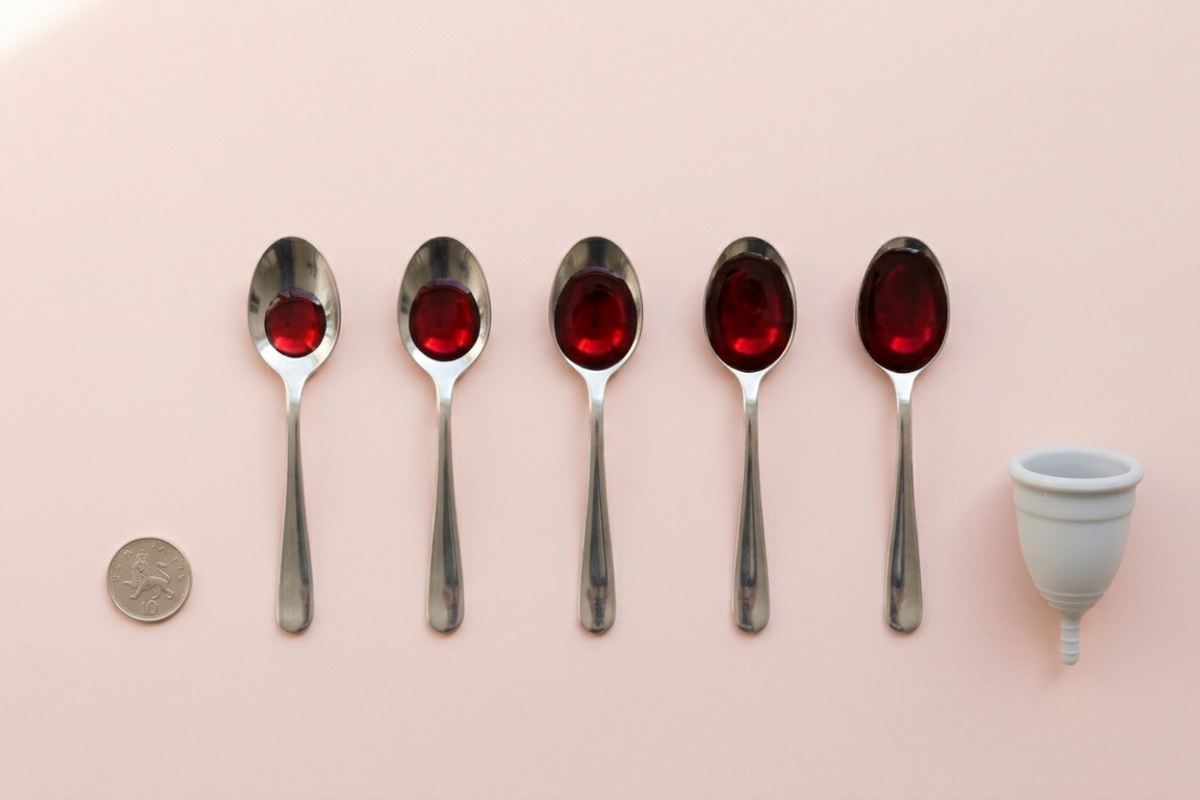
This is where things get fuzzy, because 'heavy' is famously subjective. Most people lose between 30 and 80ml of blood across an entire period (roughly two to five tablespoons, though it usually looks like more). The NHS uses these practical signs of heavy menstrual bleeding rather than millilitres:
Soaking through a pad or tampon every one to two hours
Needing to change protection during the night
Doubling up (a tampon and a pad together)
Passing clots larger than a 10p coin
Bleeding through to your clothes or bedding ("flooding")
Periods lasting longer than seven days
Around one in three women describes their period as heavy, and it's one of the most common reasons women see a GP. It often has no underlying cause, but it can also be a sign of fibroids, endometriosis, adenomyosis, polyps, or thyroid issues. Heavy bleeding also commonly causes iron-deficiency anaemia, which is why your GP will usually offer a blood test.
What different blood colours actually mean
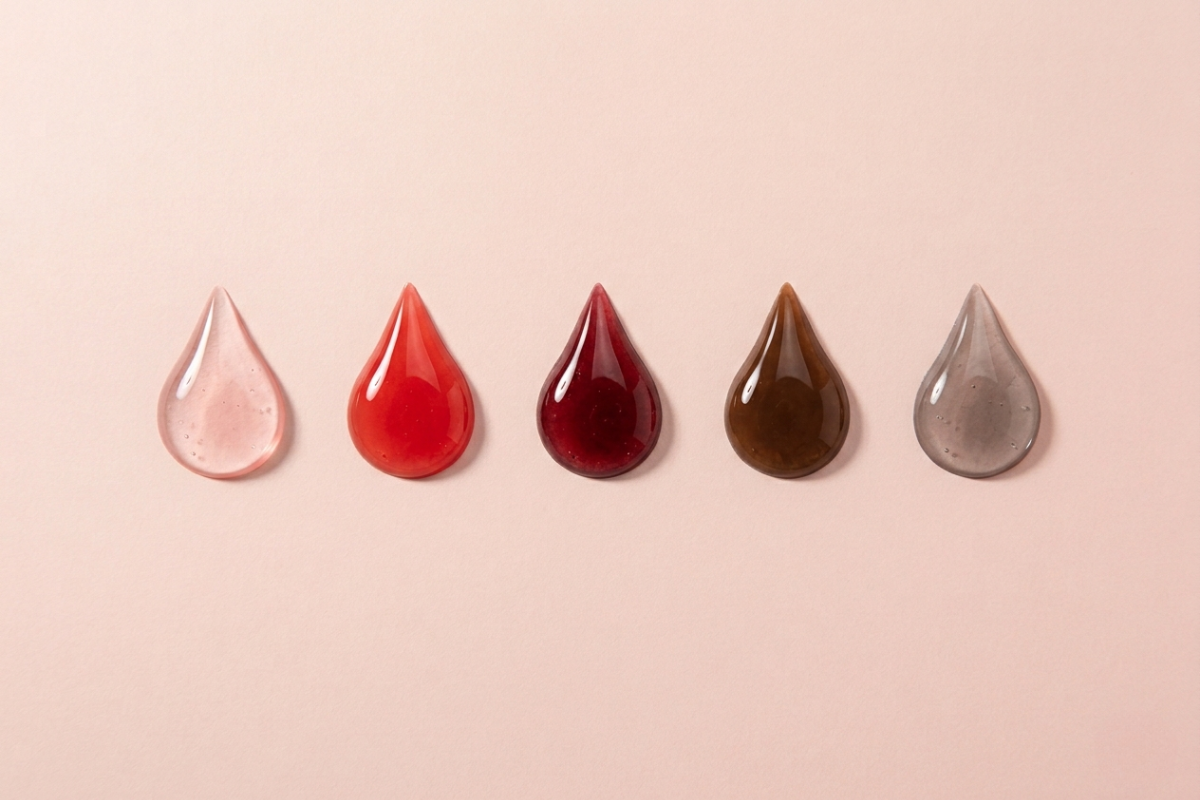
Period blood changes colour mostly because of how long it's been exposed to oxygen. Fresh blood leaves your body quickly and looks bright red. Older blood that's lingered longer oxidises and turns darker. Almost all the colour variation across a single period is normal.
Bright red is fresh blood, typical of your heaviest days when flow is fast.
Dark red or burgundy is slightly older blood, common towards the end of heavier days or in the morning after lying down overnight.
Brown or near-black is oxidised, older blood. It's very common at the start and end of your period, when flow is slower. Brown discharge between periods can sometimes be ovulation spotting or implantation bleeding, but if it's persistent or unusual for you, mention it to a GP.
Pink usually means light flow mixed with cervical fluid, common at the start or end of your period or with hormonal contraception. Persistent watery pink discharge between periods is worth checking, particularly if you're perimenopausal.
Orange, grey, or green is the one to take seriously. Grey or greenish discharge, especially with an unusual smell, itching, or pain, can indicate a vaginal infection like bacterial vaginosis or a sexually transmitted infection. Grey discharge during pregnancy can signal something more serious. Either way, see a GP or sexual health clinic promptly.
Clots: when to relax and when to ring the GP
Small clots, particularly on your heaviest days, are completely normal. They form when blood pools faster than your body's anticoagulants can break it down, which is why you tend to see them in the morning or after sitting still for a while.
The NHS guidance is to see a GP if you're regularly passing clots larger than a 10p coin, or if clotting comes alongside flooding, severe pain, or fatigue. Frequent large clots can be a sign of fibroids, hormonal imbalance, or other conditions that respond well to treatment.
When to actually book the GP appointment

Normal varies hugely, but these are the symptoms NHS guidance flags as worth investigating:
Cycles consistently shorter than 21 days or longer than 35 days
Periods lasting longer than 7 days
Soaking through pads or tampons every 1 to 2 hours
Passing clots regularly larger than a 10p coin
Bleeding between periods or after sex
Severe pain that stops you working, sleeping, or functioning
Three or more missed periods (and you're not pregnant or on hormonal contraception that suppresses periods)
Grey, green, or strongly foul-smelling discharge
Any sudden, significant change from what's normal for you
You don't need to put up with periods that wreck your life. Heavy bleeding, severe pain, and significant disruption are all treatable, and your GP has a proper toolkit for working out what's going on, from blood tests to ultrasound scans to specialist referrals if needed.
The bottom line
Periods vary, and most variation is fine. What matters more than matching a textbook description is knowing your own normal so you can spot when something genuinely changes. Tracking your cycle (an app, a notebook, anything) makes it much easier to give your GP the information they need, and much easier to feel confident that everything is, in fact, fine.
Sources
NHS: Periods. https://www.nhs.uk/conditions/periods/
NHS: Period problems. https://www.nhs.uk/conditions/periods/period-problems/
NHS: Heavy periods. https://www.nhs.uk/conditions/heavy-periods/
NHS Inform: Heavy periods (heavy menstrual bleeding). https://www.nhsinform.scot/healthy-living/womens-health/girls-and-young-women-puberty-to-around-25/periods-and-menstrual-health/heavy-periods/
NICE Guideline NG88: Heavy menstrual bleeding: assessment and management, updated 2024. https://www.nice.org.uk/guidance/ng88
Cleveland Clinic: What does the color of your period blood mean? https://health.clevelandclinic.org/what-does-the-color-of-your-period-mean
Livi UK: What does your period blood colour mean? https://www.livi.co.uk/your-health/what-does-your-period-blood-colour-mean/
You might be interested in





No Commitment, Unsubscribe Anytime
© 2026 Women's Health Guide. All rights reserved