

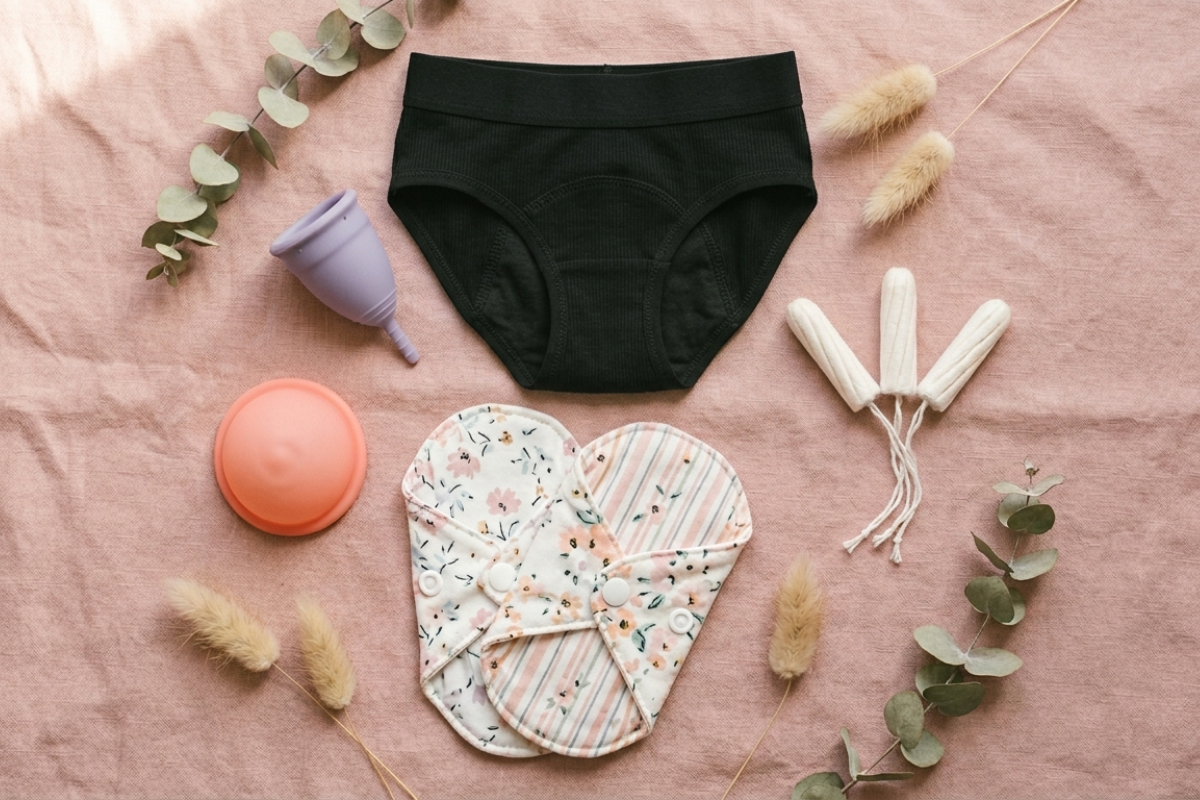
The Most Popular Sustainable Period Products in 2026 — And How They Actually Compare
An honest, brand-free guide to cups, discs, period underwear, cloth pads, and organic disposables, and which one might actually suit you.
By Sophie Bennett, Women's Health Guide
Published May 2026 • United Kingdom
You've probably heard that switching from tampons is better for the planet. But with so many options now available, from cups to discs to washable pads to period underwear, it can be genuinely hard to know where to start.
They all promise less waste, lower long-term costs, and a more comfortable period, but they work in very different ways, and what suits your best friend might not suit you at all.
Here's an honest, category-level breakdown of the five main sustainable options on the UK market right now.
Why the switch matters
The UK generates an estimated 200,000 tonnes of period product waste a year, and across Europe and the US, more than 80% of disposables end up in landfill, where the plastic components can take up to 500 years to break down.
A standard pad is up to 90% plastic, and roughly 2.5 million tampons and 1.4 million pads are flushed down UK toilets every day, contributing to sewer blockages and ocean pollution.
Reusables won't fix this on their own, but they meaningfully cut the waste a single person produces over the roughly 40 years they'll have a period, and they save money over time.
The trade-off is a higher upfront cost and a learning curve that varies by product.
Period underwear
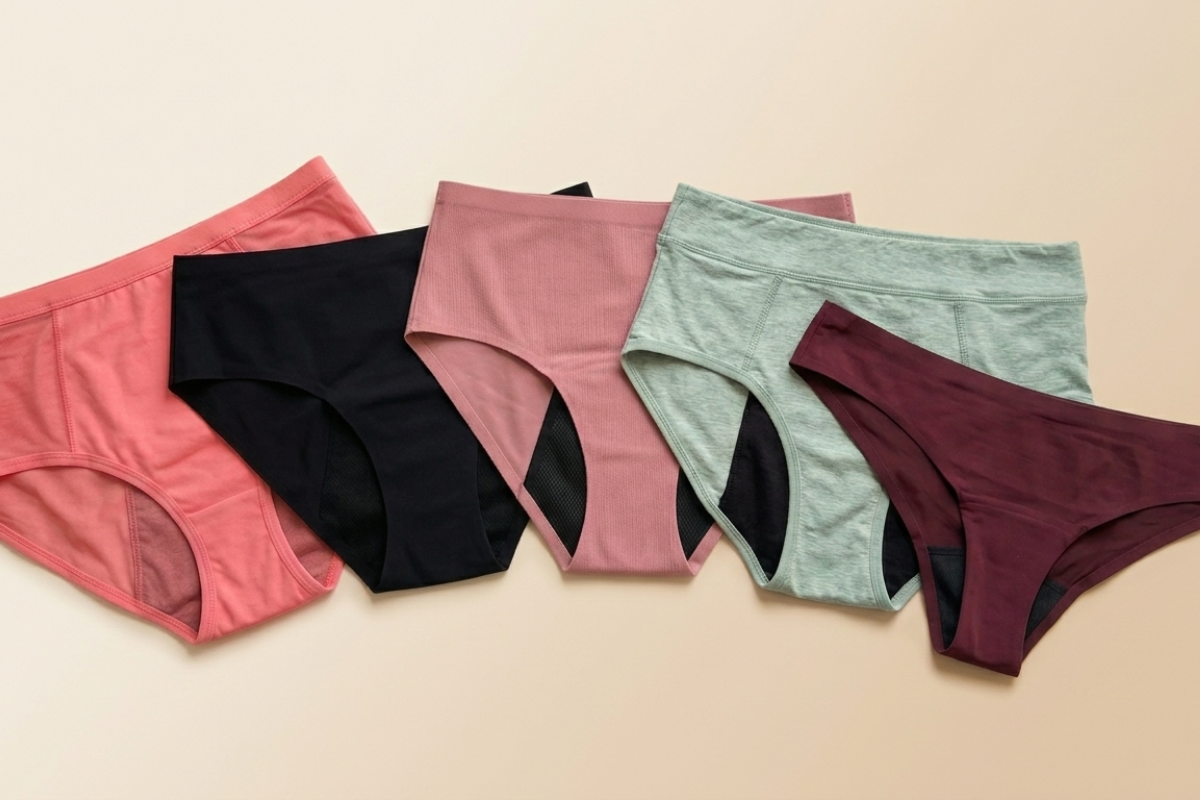
Period underwear looks like normal knickers, with a built-in absorbent gusset that holds blood without leaking. You wear them, rinse them, wash them, and wear them again. Most pairs last between two and five years.
Pros: No insertion, comfortable for sleep, discreet under clothing. A gentle entry point into reusables.
Cons: Heavier flows usually need backup or a higher-absorbency style. They take longer to dry, so you'll want several pairs in rotation.
Suits: Beginners, teenagers, light to medium flows, overnight wear, and as backup alongside a cup or disc.
UK price range: £15 to £35 per pair; starter sets typically £60 to £100.
If you want a brand-by-brand comparison, we tested 10 UK period underwear brands here.
Menstrual cups
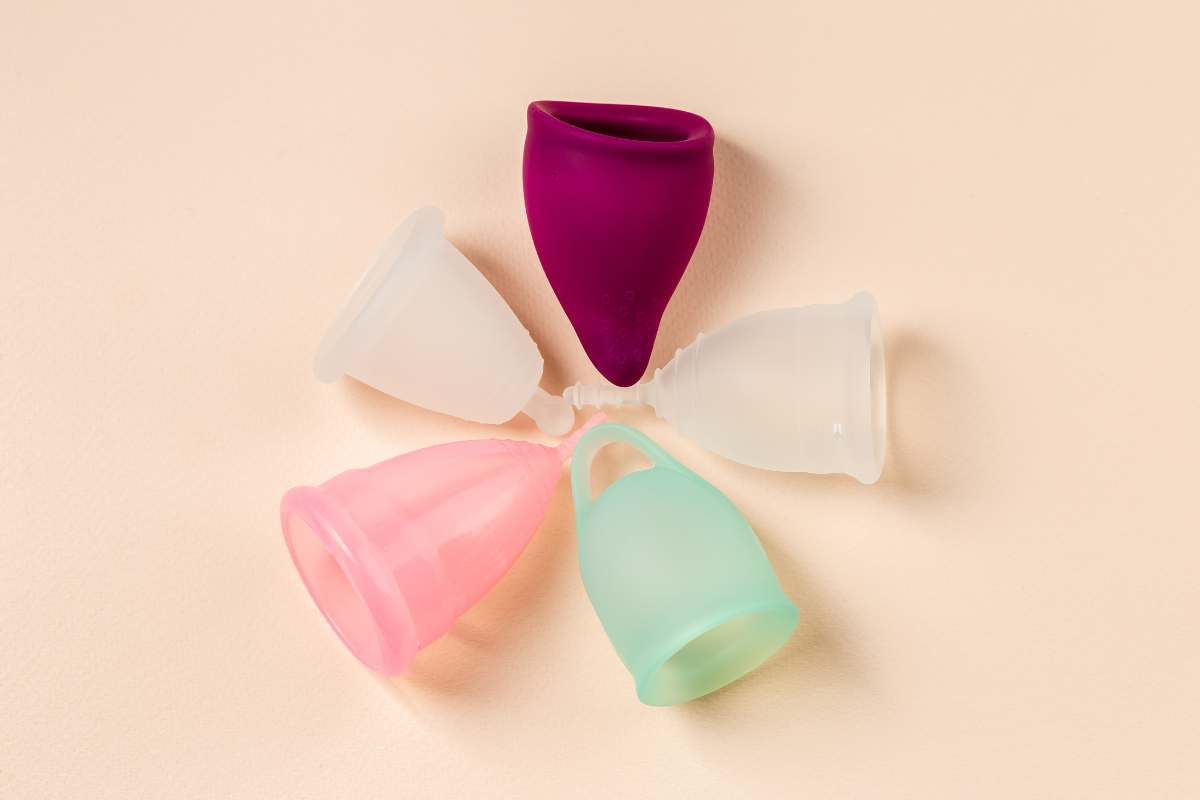
A small, bell-shaped silicone or rubber cup that sits in the lower vaginal canal and collects blood rather than absorbing it. Empty every 8 to 12 hours, rinse, and reinsert. A single cup can last up to ten years.
Pros: Very high capacity (around 30ml, more than three tampons' worth), excellent for sport, and the cheapest reusable per year of use by a wide margin.
Cons: A real learning curve. Insertion, the right fold, and breaking the seal on removal all take practice. Sizing matters: cervix height, flow, and whether you've given birth all affect which cup works best.
Suits: People comfortable with insertion, active lifestyles, anyone prioritising long-term cost.
UK price range: £12 to £30 for a single cup.
Menstrual discs
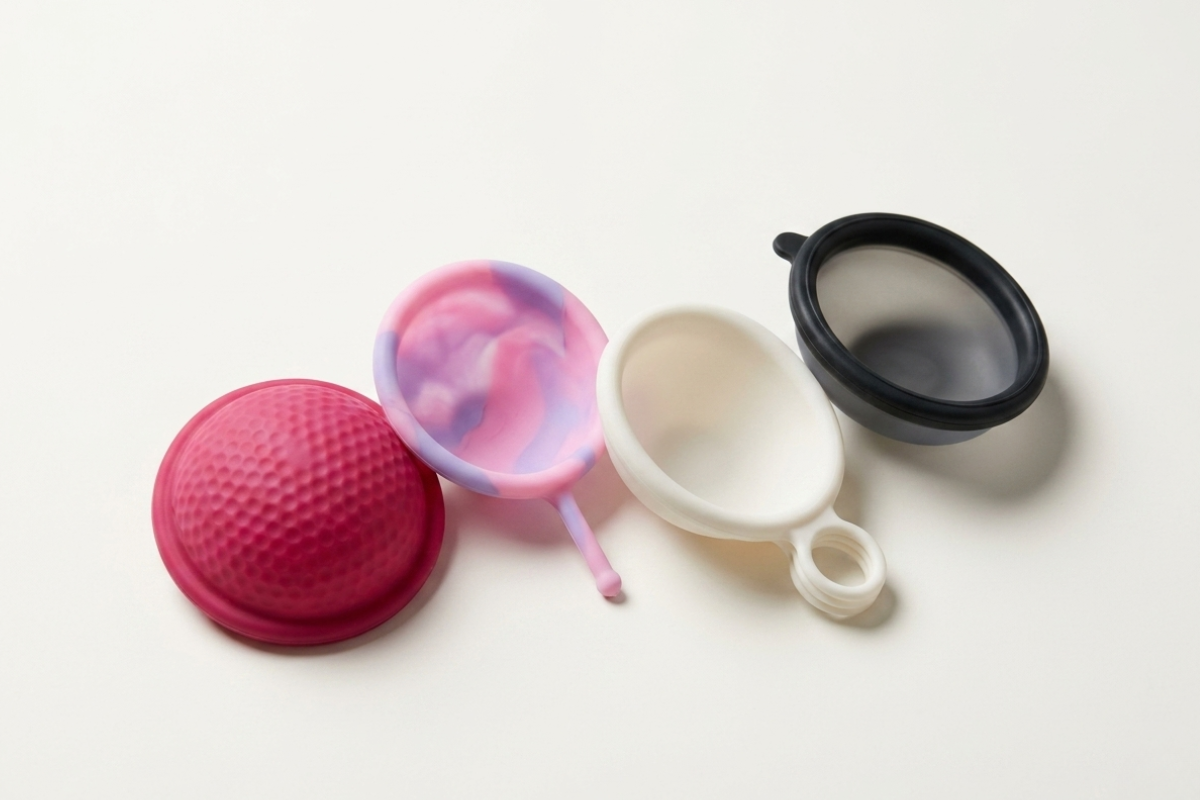
Discs are flatter and rounder than cups, and they sit higher up in the vaginal fornix, just below the cervix, rather than in the vaginal canal. They come in reusable silicone versions and disposable single-use versions.
Pros: Higher capacity than most cups (some hold up to 70ml). Because they don't rely on suction, they tend to be a better option for IUD users, and they can be worn during penetrative sex without mess.
Cons: A steeper learning curve than cups. Removal can be messier, and you need to keep the disc level as you take it out.
Suits: Heavy flows, IUD users, period-sex compatibility, and cup users wanting more capacity.
UK price range: Reusable discs £25 to £40; disposable discs £10 to £15 for a multi-pack.
Reusable cloth pads
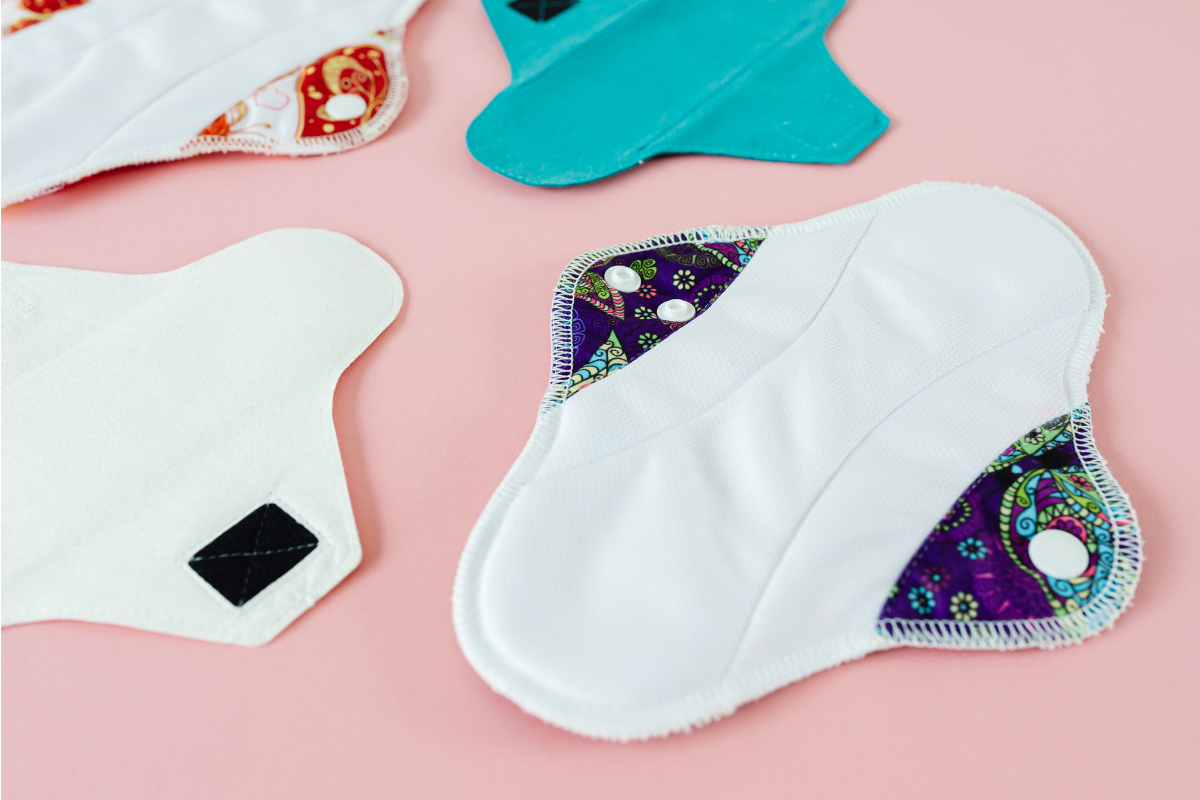
Cloth pads work like disposable pads but are made from washable layers of cotton, bamboo, or microfibre. They snap onto your underwear and get rinsed and washed after use. A good set lasts five years or more.
Pros: No insertion, breathable fabrics, excellent for overnight or postpartum bleeding.
Cons: Need a proper laundry routine. Carrying a used pad home in a wet bag isn't for everyone.
Suits: Pad preference, sensitive skin, postpartum recovery.
UK price range: £8 to £18 per pad; starter kits £40 to £80.
Organic and biodegradable disposables
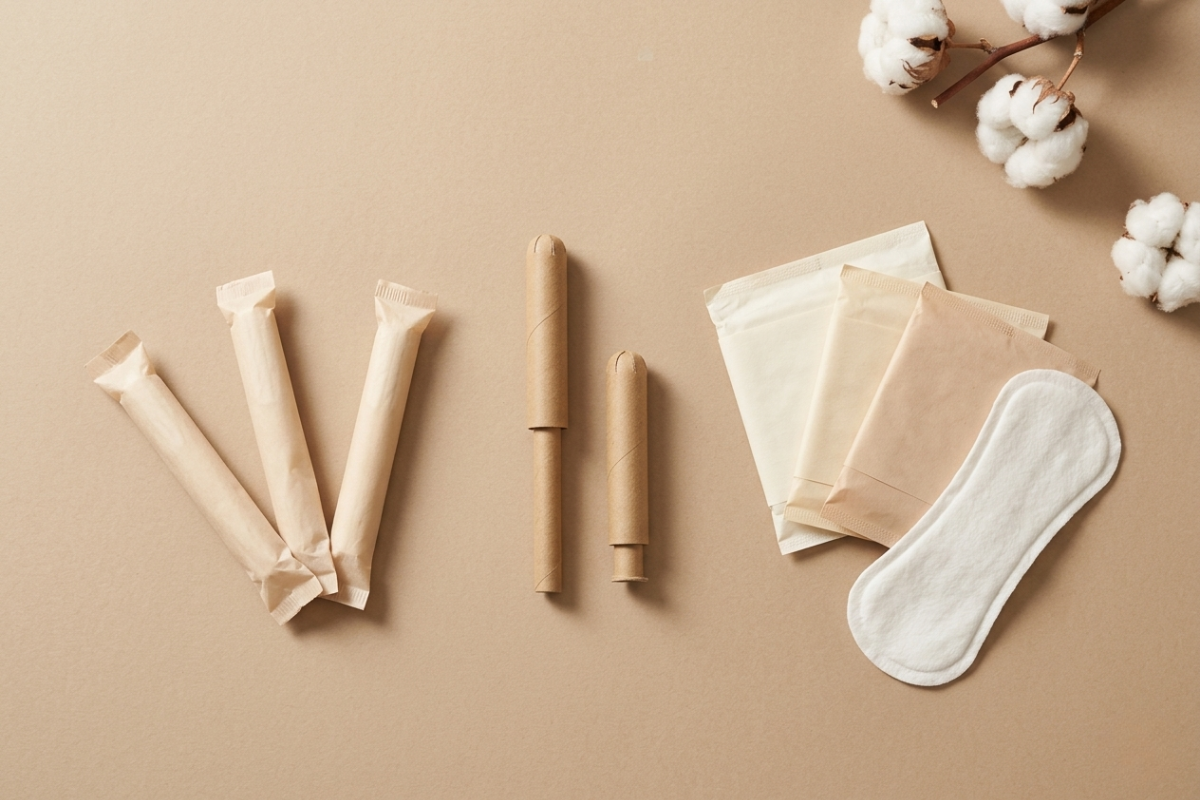
Still single-use, but made from organic cotton without the chlorine bleach, plastic backing, and synthetic fragrances of conventional products.
Pros: Zero learning curve, easy to find at Boots, Superdrug, and supermarkets. A meaningful step up from conventional disposables.
Cons: Still single-use. Even compostable products usually need industrial composting facilities. They cost more.
Suits: Travel, a gradual switch, or backup for reusable users.
UK price range: A pack of 16 organic tampons typically £4 to £6.
How they compare at a glance
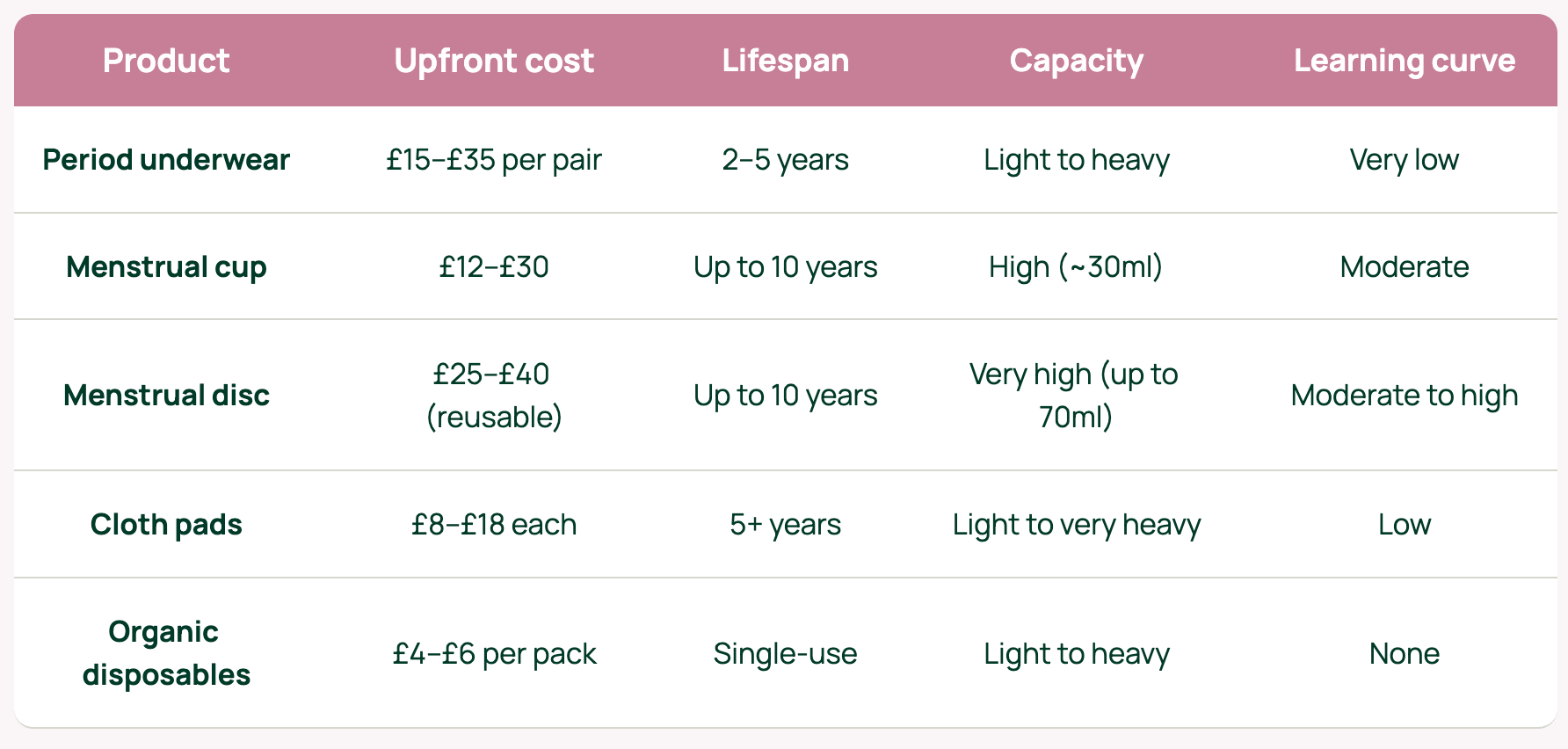
Product
Upfront cost
Lifespan
Capacity
Learning curve
Period underwear
£15–£35 per pair
2–5 years
Light to heavy
Very low
Menstrual cup
£12–£30
Up to 10 years
High (~30ml)
Moderate
Menstrual disc
£25–£40 (reusable)
Up to 10 years
Very high (up to 70ml)
Moderate to high
Cloth pads
£8–£18 each
5+ years
Light to very heavy
Low
Organic disposables
£4–£6 per pack
Single-use
Light to heavy
None
The bottom line
There's no single best answer here. The most sustainable product is the one you'll actually use consistently, and most people end up with a small mix: a cup or disc for active days, period underwear at night, and maybe a pack of organic disposables in a handbag for surprises.
Starting with one product and building from there tends to work better than overhauling everything at once.
The UK market in 2026 is genuinely spoilt for choice, and whatever your flow and comfort with insertion, there's a reusable option that will likely work for you.
Sources
WHO / NCBI: Environmental impact of menstrual hygiene products, 2025. https://pmc.ncbi.nlm.nih.gov/articles/PMC11865846/
Friends of the Earth: Plastic periods: menstrual products and plastic pollution. https://friendsoftheearth.uk/sustainable-living/plastic-periods-menstrual-products-and-plastic-pollution
ScienceDirect: An exploratory study of the impact and potential of menstrual hygiene management waste in the UK, 2022. https://www.sciencedirect.com/science/article/pii/S2666790822000404
UN Environment Programme / Life Cycle Initiative: Menstrual products and sustainable alternatives report, 2021. https://www.lifecycleinitiative.org/menstrual-products-and-sustainable-alternatives-report-2021/
Royal Society of Chemistry Education: Single-use plastic in period products. https://edu.rsc.org/feature/single-use-plastic-in-period-products/4013167.article
NHS: Periods. https://www.nhs.uk/conditions/periods/
You might be interested in





No Commitment, Unsubscribe Anytime
© 2026 Women's Health Guide. All rights reserved