

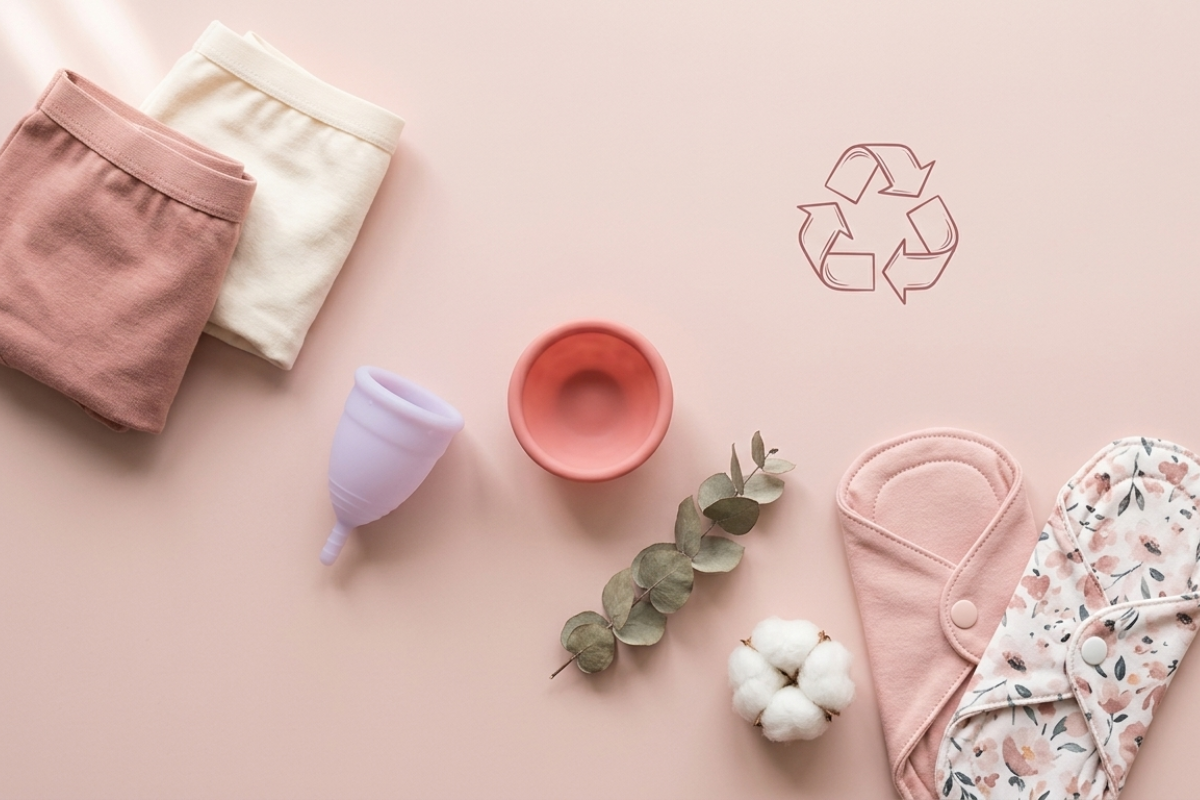
Reusable Period Products: The Most Common Questions, Honestly Answered
The practical questions that come up before you actually make the switch. Answered without the marketing spin.
By Hannah Marsh, Women's Health Guide
Published April 2026 • United Kingdom
We get it. The idea of switching sounds great in theory, better for the planet, cheaper in the long run, but the practical questions are real. We've answered the ones that come up most.
Are they actually hygienic?
Yes, as long as you clean them properly. Cups, discs, and pads should be rinsed with each change and sterilised between cycles (boiling water for cups and discs, machine wash for cloth pads).
Period underwear should be rinsed in cold water after wearing and washed after each use. Reusables don't carry any greater infection risk than disposables when used correctly, and several brands have third-party testing to confirm it.
How do you actually wash period underwear?

The short version: rinse in cold water until it runs clear (this is the key step), then machine wash on a cold or 30°C cycle with your regular laundry, using a mild detergent. Skip fabric softener (it coats the absorbent layer and reduces performance) and bleach (it damages the fabric). Air dry where possible, since tumble drying can degrade the leakproof layer in some brands. If you can't wash immediately, rinse them and pop them in a wet bag until laundry day.
Can you use a menstrual cup if you have a heavy flow?

In most cases, yes, and it can actually be one of the best options for heavy bleeders. Cups hold around 30ml on average, which is roughly three times what a regular tampon absorbs. If your flow is very heavy, you may need to empty more frequently in the first day or two, or consider a higher-capacity cup or a menstrual disc, which can hold up to 70ml. Pair with period underwear as backup if you're worried about leaks while you get used to it.
What if I'm not comfortable with internal products?
You don't need to use them, and you won't be missing out. Period underwear and reusable cloth pads are completely external and can fully replace tampons for most people. Many women never use anything internal and manage their periods perfectly well. The "best" reusable product is the one you'll actually wear, so start with what feels right rather than what sounds most efficient on paper.
Do reusable pads smell?
Not if you handle them properly. Period blood itself doesn't have a strong smell until it's been exposed to air and bacteria for a while, so the trick is rinsing pads in cold water shortly after use, then storing them in a small wet bag until wash day. Wash them within 24 to 48 hours rather than letting them sit, and machine wash with a regular detergent. Most users notice no odour at all once they have a routine going.
How long do reusable products actually last?
It depends on the product and how you care for them. Menstrual cups and discs typically last up to 10 years with proper cleaning. Reusable cloth pads last around 5 years or more. Period underwear is usually rated for 2 to 5 years, or roughly 30 to 100 washes depending on the brand, with high-quality pairs at the upper end. That said, if a product feels worn out, loses absorbency, or starts smelling permanently musty even after washing, replace it.
Are they actually cost-effective?

Yes, particularly over time. A single menstrual cup costing £15 to £30 can replace hundreds of pounds of tampons over a decade. Period underwear has a higher upfront cost (typically £15 to £35 per pair, with a starter set of three to five pairs running £60 to £150), but if it lasts three years, it works out cheaper than disposables. The break-even point is usually within 6 to 12 months for cups, and around 12 to 18 months for period underwear, after which you're saving meaningfully.
Will period underwear feel bulky or wet?
Modern designs are much thinner than people expect. Most pairs feel similar to slightly thicker regular knickers, and the absorbent layer is designed to wick moisture away from your skin, so they shouldn't feel wet during normal use. Bulkier overnight or "super" styles do exist for heavier flows, but everyday designs are discreet enough to wear under jeans, leggings, or workout clothes without being noticeable.
Where do you start if you've never used any of them?
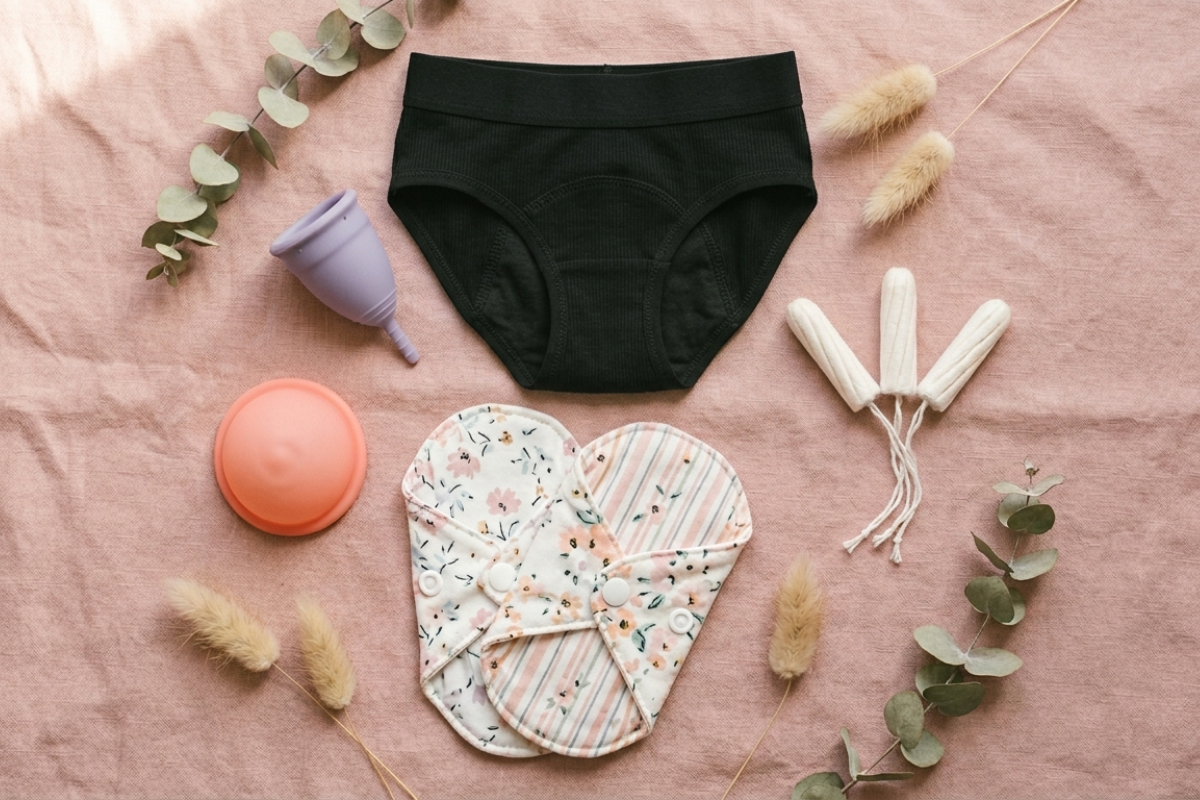
The easiest entry point is period underwear, because there's no learning curve and no insertion involved. Buy two or three pairs in a mix of absorbencies (one regular, one heavy/overnight) and use them on lighter days first to get comfortable. From there, you can experiment with a menstrual cup or disc if you want internal products, or add reusable cloth pads if you prefer external. Most people end up with a small mix rather than fully committing to one product, which is genuinely the most practical approach.
If you want a brand-by-brand comparison to help you pick your first pair, we tested 10 different period underwear brands in the UK here.
Can you wear reusables to the gym, swimming, or overnight?
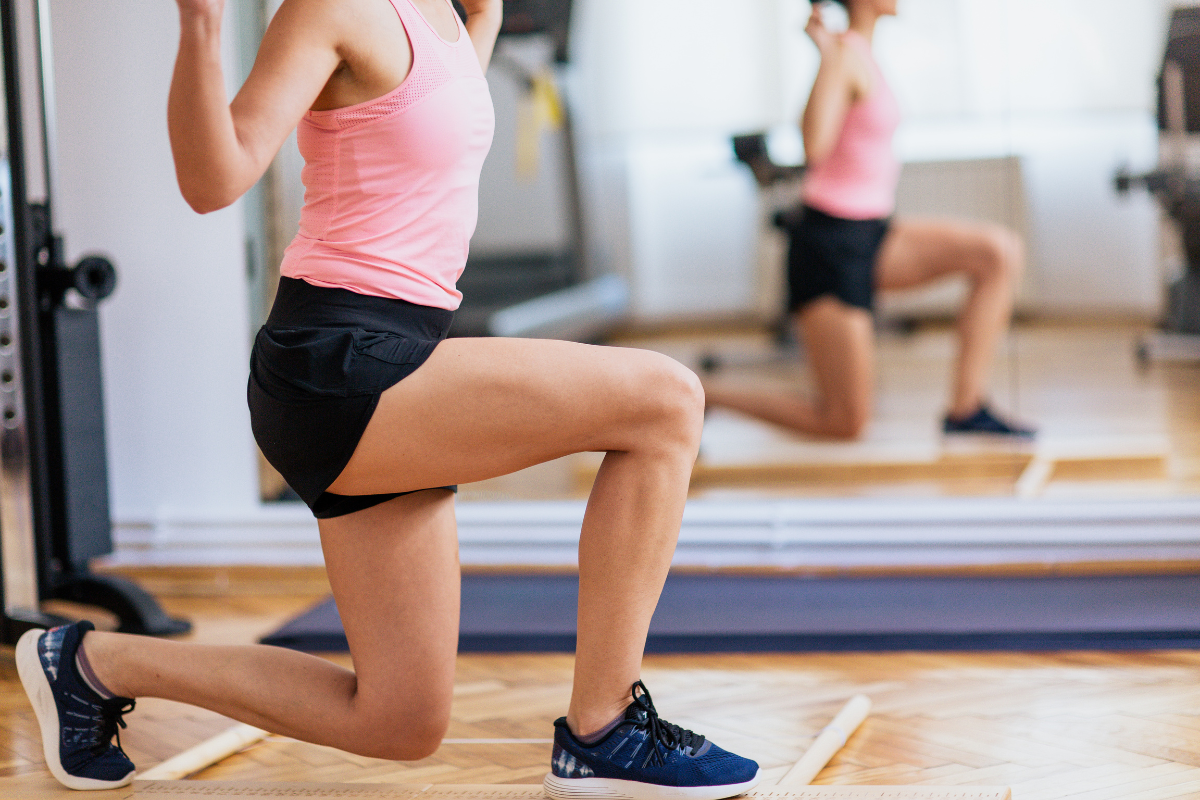
Mostly yes, with some caveats. Cups and discs are excellent for swimming, the gym, and overnight wear, and can be left in for up to 12 hours. Period underwear works well overnight (most brands have specific heavier-absorbency overnight styles) and for low-impact workouts, but isn't designed for swimming. Reusable cloth pads aren't recommended for swimming either. If you want full coverage for an active lifestyle, a cup or disc is usually the most versatile option.
The bottom line
Switching to reusables doesn't have to be all or nothing. Most people who make the change start with one product, find their groove with it over a couple of cycles, and gradually add others. There's no purity test. A mix of reusables for most of the month and a pack of organic disposables in your bag for surprises is a perfectly reasonable setup, and probably the most realistic one.
Sources
Wong et al: Functional hypothalamic amenorrhea in adolescent athletes impairs bone accrual and increases fracture risk, Frontiers in Endocrinology, 2025. https://pmc.ncbi.nlm.nih.gov/articles/PMC12722922/
Cleveland Clinic: Hypothalamic amenorrhea. https://my.clevelandclinic.org/health/diseases/24431-hypothalamic-amenorrhea
Cedars-Sinai: Going With the Flow: Menstrual Cycle Syncing and Monitoring. https://www.cedars-sinai.org/stories-and-insights/healthy-living/menstrual-cycle-syncing-and-monitoring
Colenso-Semple et al: Current evidence shows no influence of women's menstrual cycle phase on acute strength performance, Frontiers in Sports and Active Living, 2023. https://pmc.ncbi.nlm.nih.gov/articles/PMC10076834/
McNulty et al: The Effects of Menstrual Cycle Phase on Exercise Performance in Eumenorrheic Women: A Systematic Review and Meta-Analysis, Sports Medicine, 2020. https://pmc.ncbi.nlm.nih.gov/articles/PMC7497427/
The Lancet (ScienceDirect): Amenorrhoea in adolescent female athletes. https://www.sciencedirect.com/science/article/abs/pii/S2352464218301457
NHS: Periods. https://www.nhs.uk/conditions/periods/
NHS: Stopped or missed periods. https://www.nhs.uk/conditions/stopped-or-missed-periods/
You might be interested in



No Commitment, Unsubscribe Anytime
© 2026 Women's Health Guide. All rights reserved