


Period Pain vs. Something More: When Cramps Are a Sign You Should See a Doctor
Common doesn't mean normal. Here's how to tell the difference, and how to make sure your GP takes you seriously.
By Freya Willams, Women's Health Guide
Published March 2026 • United Kingdom
Period pain is incredibly common. But 'common' and 'normal' are not the same thing. For too long, women have been told their pain is just something to push through, and for many, that delay has meant years of living with an undiagnosed condition.
The latest data from Endometriosis UK shows it now takes an average of 8 years and 10 months to be diagnosed with endometriosis in the UK, and the wait has been getting longer rather than shorter.
That's a long time to spend believing your pain is something you just have to manage. The good news is that knowing what's actually worth flagging, and how to flag it well, can shorten that wait considerably.
What's actually happening when you cramp
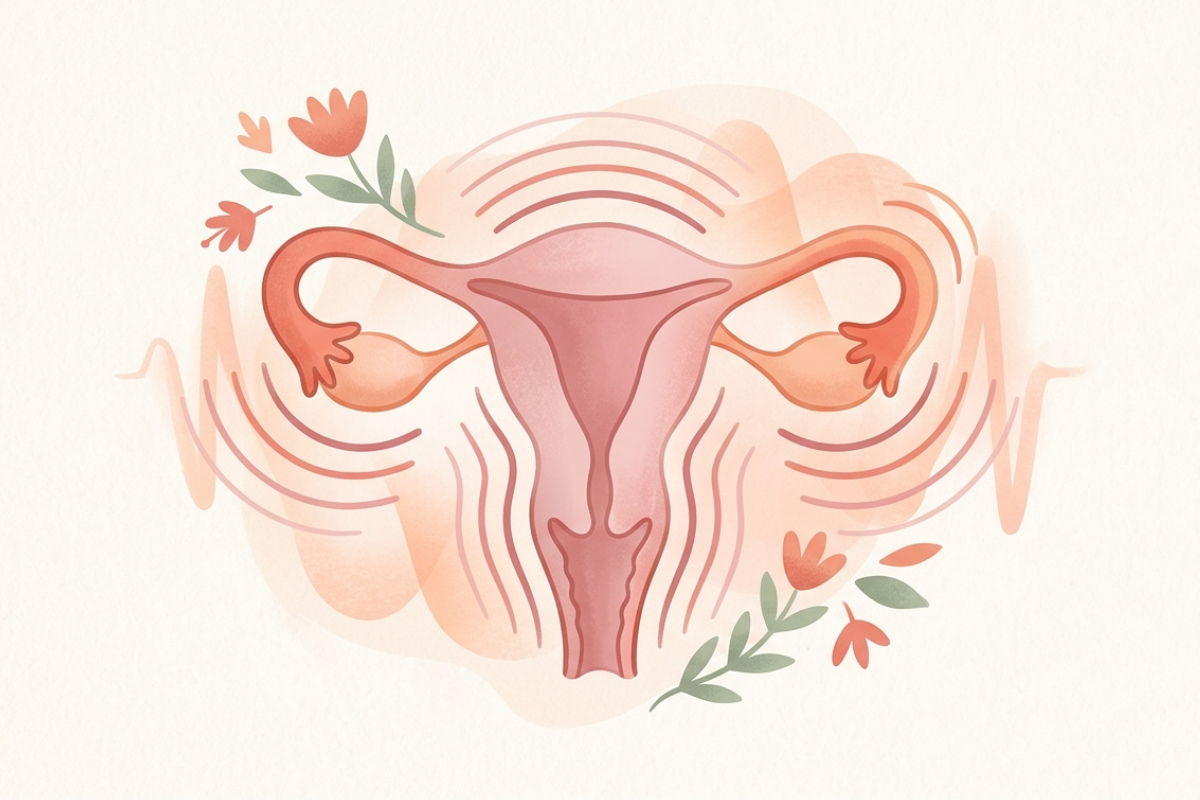
Period cramps come from your uterus contracting to shed its lining. Those contractions are driven by prostaglandins, hormone-like compounds your body releases at the start of your period. Higher prostaglandin levels mean stronger contractions, which means more pain. The contractions also briefly restrict blood flow to the muscle, which is why cramps can feel a bit like the muscle equivalent of holding your breath for too long.
Mild to moderate cramping in the first day or two of your period is genuinely normal, and usually responds well to over-the-counter painkillers, a hot water bottle, gentle movement, and rest. This is medically called primary dysmenorrhoea, period pain without an underlying condition.
The pain spectrum: where does yours sit?
Period pain runs across a spectrum, and where you sit on it matters more than the absolute intensity.
Manageable. You feel it, you might take ibuprofen or paracetamol, but you can still go to work, exercise if you want to, sleep through the night, and function normally. The pain is gone within a couple of days.
Disruptive. You sometimes need to call in sick, cancel plans, or spend most of day one curled up. Painkillers help but don't completely solve it. This is worth mentioning to your GP, particularly if it's getting worse.
Severe. You regularly miss work, school, or social events. The pain interferes with sleep, eating, or your ability to function. Painkillers barely touch it, or you've quietly worked your way up to taking maximum doses just to get through. This is a clear reason to see your GP, ideally with a symptom diary in hand.
Red flags worth raising with a GP
NHS guidance and gynaecology specialists agree on a clear list of symptoms that warrant proper investigation rather than another box of paracetamol:
Pain that stops you working, sleeping, or doing normal activities
Pain that ibuprofen, paracetamol, or hormonal contraception doesn't manage
Pain that's getting noticeably worse over months or years
Pain in your pelvis or abdomen between periods, not just during them
Pain during or after sex
Pain when you go to the toilet (urinating or having a bowel movement, particularly during your period)
Very heavy bleeding (soaking through pads or tampons every one to two hours, or passing clots larger than a 10p coin)
Bleeding between periods or after sex
Difficulty getting pregnant, alongside any of the above
You don't need to tick every box. Even one of these on its own is worth a GP visit.
Conditions these symptoms can point to
If your symptoms suggest something more, your GP may consider one of several common conditions. None of these are sentences. All of them have treatments. Knowing the names just means you can have a more informed conversation.
Endometriosis. Tissue similar to the uterine lining grows outside the uterus, on the ovaries, fallopian tubes, or surrounding pelvic organs. It bleeds and inflames in time with your cycle, causing severe pain, heavy periods, pain during sex, and sometimes fertility problems. Around 1 in 10 women in the UK has endometriosis.
Adenomyosis. Tissue similar to the uterine lining grows into the muscular wall of the uterus itself. Common symptoms are heavy, prolonged periods and severe cramping, often with a feeling of pelvic heaviness or pressure. It's frequently underdiagnosed and often coexists with endometriosis or fibroids.
Fibroids. Non-cancerous growths in or on the wall of the uterus. They vary hugely in size and can cause heavy bleeding, prolonged periods, pelvic pressure, lower back pain, and sometimes pain during sex. Fibroids are very common, particularly from your thirties onwards.
Polycystic ovary syndrome (PCOS). A hormonal condition that often shows up as irregular or missed periods, but can also cause pelvic pain, heavy bleeding when periods do come, and other symptoms like acne, excess hair growth, and difficulty losing weight.
Pelvic infections. Conditions like pelvic inflammatory disease (PID) can cause persistent pelvic pain, unusual discharge, and pain during sex. These are treatable with antibiotics but worth catching early.
How to actually get heard at your GP appointment
The single most useful thing you can do before an appointment is track your symptoms for two or three cycles. A simple notebook or cycle tracking app is fine. Note:
When your periods start and end
Pain levels day by day, on a 1 to 10 scale
What painkillers you took and whether they helped
Days you missed work, sleep, or normal activity
Any pain between periods, during sex, or going to the toilet
How heavy the bleeding was (clots, flooding, pad/tampon changes per hour)
Bring this with you. A page of evidence is much harder to wave away than "my periods feel really bad," and it gives the GP something concrete to work with.
A few phrases that tend to help: "This is interfering with my daily life." "I've tried [X painkiller / hormonal contraception] and it isn't enough." "I'd like to discuss being referred to gynaecology." If you don't feel listened to, you're entitled to ask for a second opinion or see a different GP at the same practice.
The bottom line
Period pain that genuinely disrupts your life is not something you should be expected to live with. The diagnostic delays for conditions like endometriosis are real, frustrating, and well-documented, but they're also avoidable when you arrive at your appointment with clear evidence and the right language. Trust your sense that something isn't right. Push for proper investigation. The earlier these conditions are caught, the more treatment options you have.
Sources
NHS: Period pain. https://www.nhs.uk/conditions/period-pain/
NHS: Endometriosis. https://www.nhs.uk/conditions/endometriosis/
NHS: Fibroids. https://www.nhs.uk/conditions/fibroids/
NHS: Polycystic ovary syndrome (PCOS). https://www.nhs.uk/conditions/polycystic-ovary-syndrome-pcos/
NHS: Adenomyosis. https://www.nhs.uk/conditions/adenomyosis/
Endometriosis UK: Diagnosis report, 2024. https://www.endometriosis-uk.org/diagnosis-report
NICE Guideline NG88: Heavy menstrual bleeding: assessment and management. https://www.nice.org.uk/guidance/ng88
University of York: Diagnosing endometriosis takes an average of almost 7 years, 2024. https://www.york.ac.uk/news-and-events/news/2024/research/diagnosis-endometriosis-delay/
You might be interested in





No Commitment, Unsubscribe Anytime
© 2026 Women's Health Guide. All rights reserved