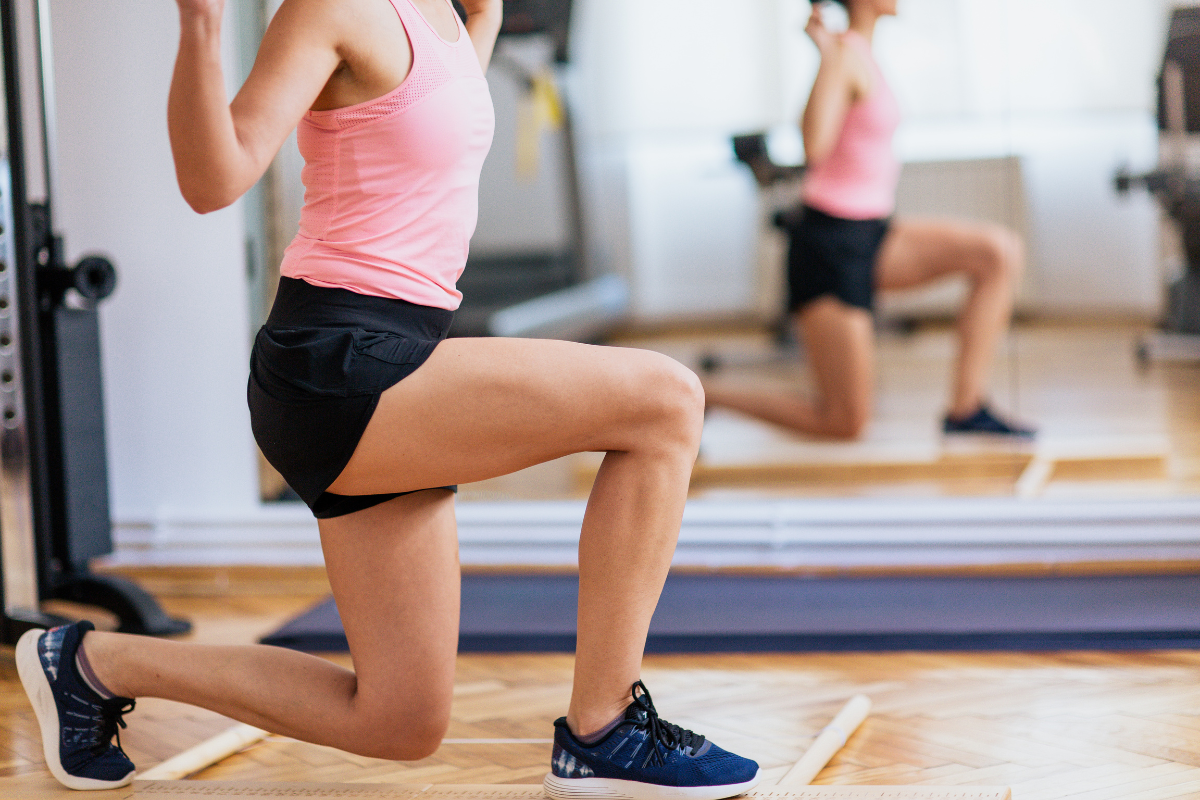
How Exercise Affects Your Period — And Your Period Affects Your Exercise
The honest two-way relationship between movement and your cycle, and how to work with it rather than against it.
By Sophie Bennett, Women's Health Guide
Published May 2026 • United Kingdom
You've probably noticed that some days you can smash a workout and others you can barely get off the sofa. Your cycle has more to do with that than you might think.
The relationship between exercise and your period runs in both directions. Your hormones shift across the month and quietly change how you feel about moving your body, and the way you train can also affect whether your period shows up at all. Here's the practical, evidence-based version of how that works, and what to do with it.
How energy typically varies across the cycle
There are four main phases, and although individual experiences vary widely, most women notice rough patterns:
Menstrual phase (days 1 to 5, roughly). Oestrogen and progesterone are at their lowest. Energy often dips, particularly on day one or two. Cramps, fatigue, and emotional flatness are common.
Follicular phase (days 6 to 13). Oestrogen climbs steadily as your body prepares to ovulate. Many women report rising energy, motivation, and a stronger appetite for harder workouts.
Ovulatory phase (days 14 to 16). Oestrogen peaks, testosterone rises briefly, and energy often hits its high point. This is the week most people feel most capable.
Luteal phase (days 17 to 28). Progesterone rises, then drops sharply at the end if there's no pregnancy. Early luteal can still feel decent. Late luteal (the few days before your period) is when PMS, low mood, sleep disruption, and lower exercise tolerance tend to show up.
Worth saying upfront: the evidence that you should radically restructure your training around these phases is thin. A 2025 study from McMaster University found cycle phase had no measurable effect on muscle protein synthesis. But the evidence that energy, mood, and perceived effort vary across the cycle is strong, and that's worth listening to.
Why intense exercise can stop your periods
If you train hard and your period disappears or becomes very irregular, that's not a sign of fitness. It's a sign your body has decided it doesn't have enough energy to support a cycle.
The condition is called functional hypothalamic amenorrhoea (FHA). It happens when your hypothalamus, the part of your brain that signals your ovaries to ovulate, dials down its activity because energy intake is too low to match what you're burning. This is often called "low energy availability." Stress and undereating can push it over the edge even without high training volume.
FHA is most common in endurance athletes (runners, cyclists, triathletes), aesthetic sports (dance, gymnastics, figure skating), and anyone training hard while restricting food. Some estimates suggest up to 65% of female distance runners have experienced it at some point. It's reversible, but it's not harmless. Long-term, FHA causes low oestrogen, which weakens bones and significantly raises your fracture risk. One study found adolescent athletes with amenorrhoea had four times the lifetime fracture risk of non-athletes.
If your period has stopped for three months or more and you're not pregnant or on contraception that suppresses periods, see your GP. This isn't a wait-and-see issue.
Is it fine to exercise during your period? Yes.
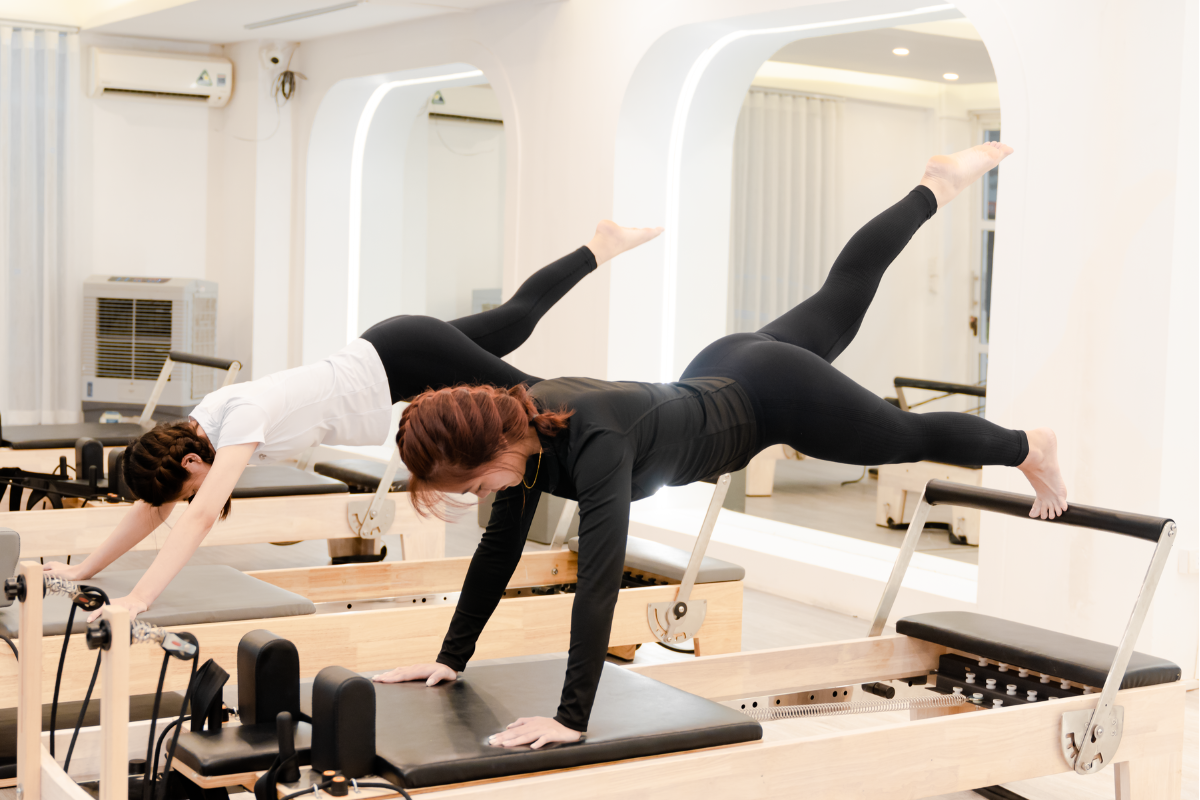
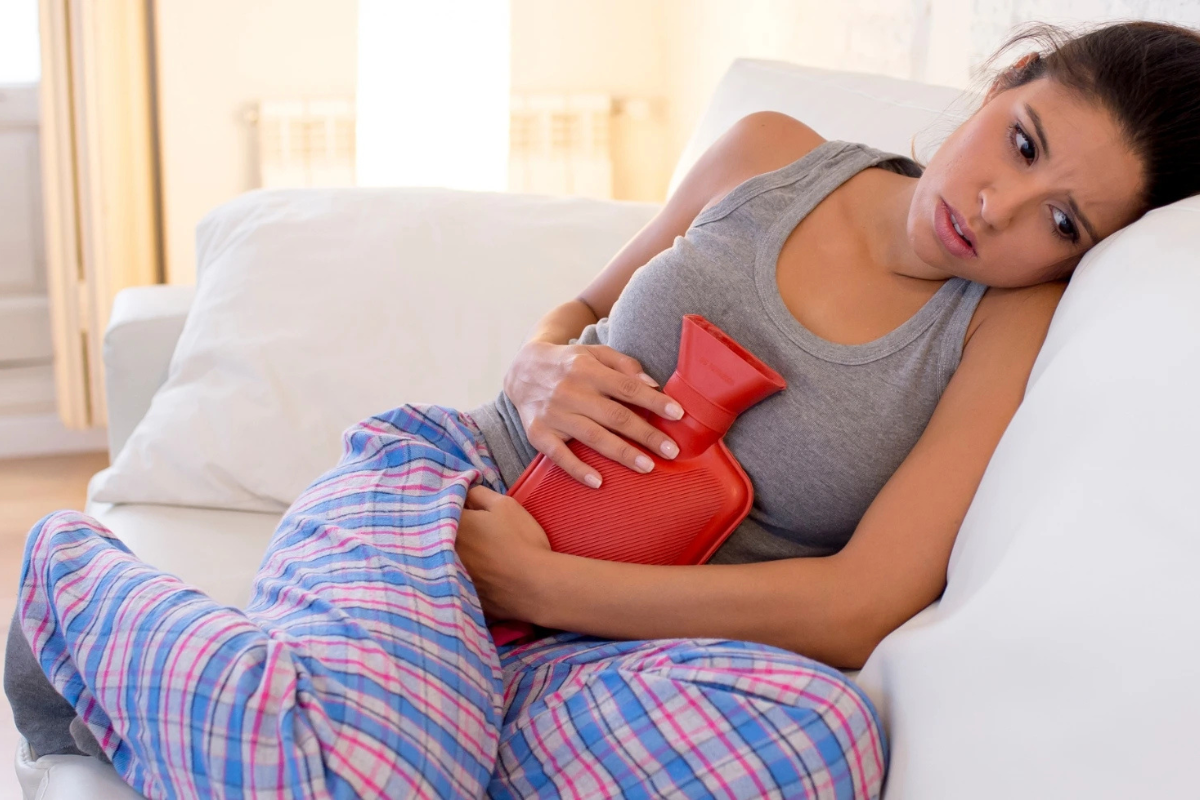
There's no medical reason to skip workouts during your period, and for many women, gentle to moderate exercise actually eases cramps. Movement releases endorphins (natural painkillers), improves blood flow, and reduces prostaglandin sensitivity, which is the underlying driver of period pain.
That said, listen to your body. If you feel rotten on day one and the thought of a HIIT class makes you want to cry, a walk is genuinely better than forcing yourself through something punishing. Working with your energy is not the same as opting out of exercise.
What kind of movement works best in each phase
If you want to lean into your cycle without micromanaging it, this is a reasonable framework rather than a rule:
Menstrual phase. Gentle is often better. Walking, yoga, swimming, easy cycling, low-intensity strength work. Some women feel great by day three and want to lift heavy again; others need the whole week to feel themselves. Both are normal.
Follicular phase. Most women report this is when they feel strongest. Good week for higher-intensity training, longer cardio sessions, lifting heavier, trying something new, or pushing personal bests if that's your thing.
Ovulatory phase. Energy often peaks here. Sprint intervals, HIIT, group classes, or any workout that feels like a challenge tends to land well. One small caveat: some research suggests joint laxity changes slightly around ovulation, which may marginally raise injury risk in elite athletes. For most people exercising recreationally, this isn't worth planning around.
Luteal phase. Steady, moderate exercise tends to feel best, particularly in the last few days. Pilates, lower-intensity strength training, yoga, and steady cardio all work well. This isn't the week to plan a heavy PB attempt, but it's also not a write-off.
The honest version: track how you feel for a couple of cycles and let that inform your training, rather than rigidly following any plan. Your body's data is more useful than a generic schedule.
When missing your period from exercise is genuinely worth flagging
A skipped period now and then is usually nothing to worry about. But these are worth a GP appointment:
No period for three months or more, with no pregnancy or contraceptive explanation
Very irregular cycles (less than 21 days apart, or more than 35) for several months running
Sudden disappearance of your period after a training intensity increase or a weight loss period
Stress fractures, particularly if you've had more than one
Periods that stop alongside ongoing fatigue, low mood, or poor recovery from training
The conversation to have with your GP is about energy availability, not just exercise. You're not being asked to stop training. You're being asked to fuel it properly so your body has the resources to do everything it needs to.
The bottom line
Exercise and your cycle are in conversation with each other, and the more you tune into both, the better your relationship with movement gets. Train hard when you can, ease off when you genuinely need to, and pay attention if your period quietly disappears. The aim isn't to optimise every workout around your hormones. It's to stop fighting your body and start working with it.
Sources
Wong et al: Functional hypothalamic amenorrhea in adolescent athletes impairs bone accrual and increases fracture risk, Frontiers in Endocrinology, 2025. https://pmc.ncbi.nlm.nih.gov/articles/PMC12722922/
Cleveland Clinic: Hypothalamic amenorrhea. https://my.clevelandclinic.org/health/diseases/24431-hypothalamic-amenorrhea
Cedars-Sinai: Going With the Flow: Menstrual Cycle Syncing and Monitoring. https://www.cedars-sinai.org/stories-and-insights/healthy-living/menstrual-cycle-syncing-and-monitoring
Colenso-Semple et al: Current evidence shows no influence of women's menstrual cycle phase on acute strength performance, Frontiers in Sports and Active Living, 2023. https://pmc.ncbi.nlm.nih.gov/articles/PMC10076834/
McNulty et al: The Effects of Menstrual Cycle Phase on Exercise Performance in Eumenorrheic Women: A Systematic Review and Meta-Analysis, Sports Medicine, 2020. https://pmc.ncbi.nlm.nih.gov/articles/PMC7497427/
The Lancet (ScienceDirect): Amenorrhoea in adolescent female athletes. https://www.sciencedirect.com/science/article/abs/pii/S2352464218301457
NHS: Periods. https://www.nhs.uk/conditions/periods/
NHS: Stopped or missed periods. https://www.nhs.uk/conditions/stopped-or-missed-periods/
You might be interested in


No Commitment, Unsubscribe Anytime
© 2026 Women's Health Guide. All rights reserved